Before I ever sold a single leather tile, I was in fashion. Then a sculptor. Then a photographer. Then an interior designer with a practice in New York. Three different studios, one obsession: surfaces. How a material catches light. What it asks of your hand when you touch it. Whether a room merely looks finished — or feels inevitable.
So the thing that changed my professional life wasn’t a boardroom pitch. It was a stack of leather sitting quietly on a stand at a New York furniture fair.
The stack of leather at the fair
I was at the fair to see a designer whose work fascinated me — he was building beautiful outdoor furniture from reclaimed storm-felled wood, the kind of resourceful, principled making I’ve always been drawn to. But while we talked, my eye kept going to a pile of leather samples sitting on his stand.
“What’s this? It’s beautiful.”
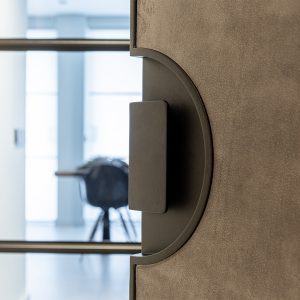
It was leather from a small Dutch atelier called Alphenberg — water buffalo hides, a residual product of the meat industry that would otherwise be discarded, transformed into upholstery panels for walls. Their philosophy was five words long: leather should look like leather. No embossed fakery, no plastic top-coat. Every scar and grain line left in, because skin isn’t manufactured — it comes into being through a life.
Not long after, the person showing the leather reached out to me: would I be interested in taking it on for the United States?
I knew exactly what I’d be signing up for. Introducing an unknown architectural material from another country to American designers isn’t a product launch — it’s an education. The long, slow grow. I said yes anyway. That’s how sure I was about what I’d felt in that stack of samples.
A decade as Alphenberg New York
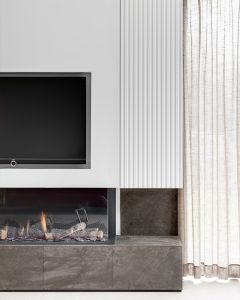
For five years my interior design studio, Dyan Ditolla Grey, represented the atelier here, and then we made it official: Alphenberg New York, the original U.S. partner, working from Bethune Street in the West Village. (The design studio didn’t go anywhere, by the way — I still run it today; Dyan Leather grew beside it, not in place of it.) For more than a decade I’ve curated these collections for American architects, interior designers, and developers — leather walls in private residences and hotels, leather floors that outlast and outcharm any hardwood, acoustic panels that make a boardroom sound as considered as it looks.
The projects taught me something the brochures never could: nobody buys leather surfaces from a photograph. The conversation truly begins the moment a designer holds the sample — turns it over, runs a thumb across the nubuck, smells it. That’s the moment this material sells itself. My job, I eventually understood, is simply to get the leather into your hands. (And when a sample ships, it’s still me who follows up — that part of this business has never been delegated.)
The question I get asked most
Every so often, someone calls and asks whether we carry faux leather — vegan leather, as it’s usually put. It’s a fair question, and my answer tends to surprise people, because the sustainability story here is the reverse of what most of us assume.
Our hides are a waste product of the meat industry. The animal was never raised for its skin; we rescue what would otherwise be discarded and give it a second life measured in decades. It’s a natural material that ages the way we do — gaining character, deepening in color, growing more beautiful underfoot and under hand. Faux leather is a petroleum product: full of chemicals, and after a few years it cracks and gets replaced — by more plastic. One of these is a waste product turned into permanence. The other is permanence turned into waste. We aren’t cradle-to-cradle certified, but the atelier lives by that philosophy: use everything, waste nothing.
Why the name changed
So why, after a decade, walk away from a name people knew?
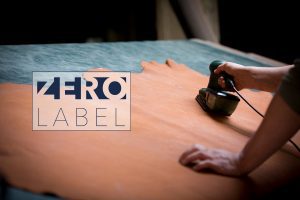
Because a curator should stand behind her curation. The atelier remains the atelier — every tile is still handcrafted in Europe by Alphenberg, still chrome-free, still made to use everything and waste nothing. What changed is that the American collection now carries the judgment, the eye, and the name of the person choosing it. Dyan Leather is the same partnership, the same craftsmen, the same West Village address — with my own name on the door and a promise attached to it: where art meets architecture.
It’s the name I sign my sculpture with. I don’t sign anything I wouldn’t defend. And a name of my own means room to grow — this collection will keep expanding into new leather work I’ve been dreaming about for years. I’ll never stop. That’s not who I am.
What you’ll find here
The new dyanleather.com brings everything into one place: all fourteen collections — from the architectural grids of Boxer to the deep pile of Suède to the raw, hand-waxed character of Vintage Raw — alongside application guides, a growing journal, and the project inspiration our clients have asked me to share for years.
And because I still believe the sample is where every project really starts, we’ve made that the easiest part of the site.
Order your samples → dyanleather.com/collections
Pick any collection, request swatches, and have the leather on your desk within a week. Run your thumb across it. Then let’s talk about your project.
— Dyan Ditolla Grey, Founder, Dyan Leather, New York